‘Nicht diese Töne!’ – Beethoven’s Ninth and the Furtwängler Debate
In late 1943, the German conductor Wilhelm Furtwängler came to Stockholm to give several performances, including Beethoven’s 9th symphony with the Royal Stockholm Philharmonic Orchestra. He had conducted in Sweden numerous times during the Second World War, but by the time of this visit, calls for a boycott grew increasingly strong. An important contributing factor was the University of Oslo fire on 28 November 1943, which resulted in the arrest of 1,166 students and the deportation of 644 of them to German “re-education” camps. The controversy formed part of a broader Scandinavian debate about cultural exchange with Nazi Germany during the war.
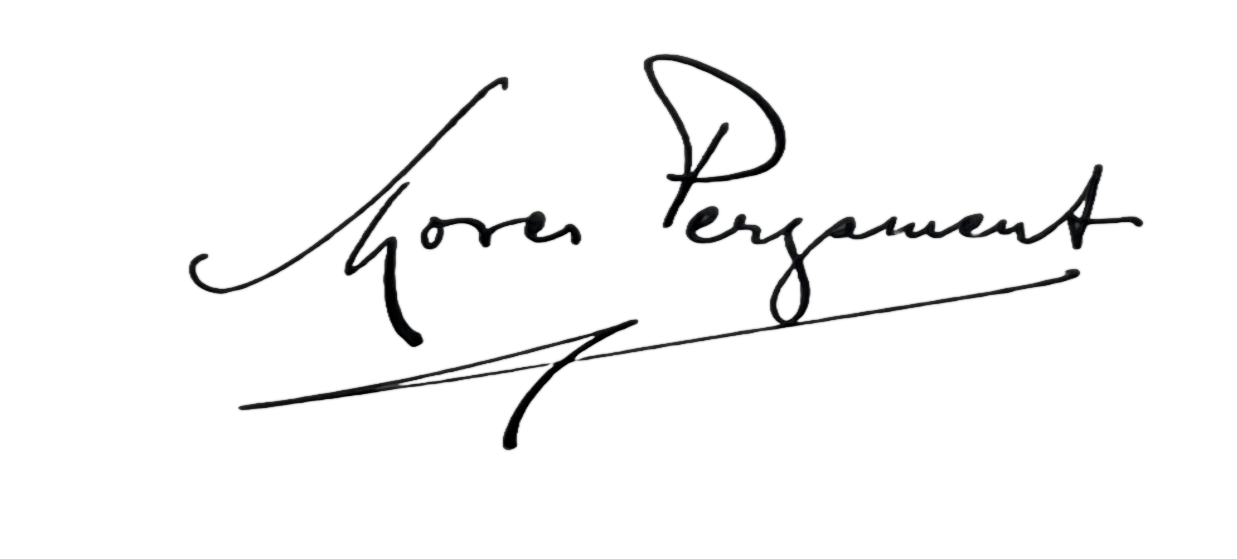
In the midst of the Swedish debate that ensued over Furtwängler’s visit, the German conductor found an unexpected defender. The following text by Moses Pergament is at once an opinion piece and a concert review, followed by part of the debate it provoked and concluding editorial commentary.
“Nicht diese Töne!”
There is a curious paradox here: Wilhelm Furtwängler, the brilliant conductor, by Hitler’s grace a German State Councillor since 1933, a voluntary—or perhaps involuntary—representative of what the chairman of the Uppsala Student Union last Saturday called ‘the forces of unfreedom and intolerance’, stood yesterday before the Concert Society and urged choir and orchestra to the highest intensity in the exultant sounds of universal brotherhood and international solidarity, in the Ode to Joy.
What Schiller put into verse and Beethoven set to music speaks of a world in which peace, freedom and love of mankind have entered into a covenant for the blessing of all and everyone. No—not for everyone! He who, through lack of love, cannot call a single fellow human being his friend, must ‘stehe weinend sich aus diesem Bund’ [‘stand weeping apart from this bond’].
Seldom has the gulf between dream and reality, between poetic vision and lived existence, grown so violently wide as it has here and now. It is certainly not with the ‘gentle wing of joy’ that fate now wafts over oppressed humanity. What Schiller and Beethoven dreamed of may have been a utopia, condemned to remain such forever. Yet it was the confession of faith of the humane German spirit, a shimmering stream from the source of the deepest wisdom and the noblest feeling—goodness. That goodness which linked minds, hearts and hands across social and national barriers in mutual understanding, human sympathy, and a higher sense of communion.
The man who tore up the title page of the Eroica on the grounds that an autocrat who has allowed himself to be possessed by his lust for glory can become nothing other than an oppressor, and is therefore unworthy of a dedication—that man would never have wished to serve as a cultural emissary of a regime whose doctrines of struggle are founded on terror and spiritual obscurantism. “Nicht diese Töne!” he would have cried out to them. And had it been within his power to defy them, he would have mounted the imperishable German platform laid in stone by Lessing, Schiller and Goethe, and from there sung out to the world: ‘Alle Menschen werden Brüder’ [‘All men shall become brothers’] and ‘Seid umschlungen, Millionen!’ [‘Be embraced, ye millions!’]
★
When Furtwängler comes to us in this dark hour with Beethoven’s Ninth Symphony—the cosmopolitan confession of German musical art, which spreads a little light and warmth into our souls and offers crutches to our maimed faith in a universal will towards the good—I cannot rid myself of a thought that keeps returning: the man is, knowingly or unknowingly, intentionally or unintentionally, serving the cause of Beethoven and Schiller! An appeal calling for his boycott was on the verge of being published in the newspapers. What folly! I now see that his appearance with the Ninth could scarcely have been more timely. For it constitutes the most forceful protest against violence and tyranny, hatred and the incitement of men against men, ever expressed in the shared language of thought and feeling.
If Furtwängler’s interpretation yesterday did not, for me at least, awaken the same rapture as it did twenty years ago, that was partly my own doing, and partly his. In the intervening years we have heard so many grand expositions of the work that it is no longer easy, even for a Furtwängler, to offer an interpretation unrivalled in every respect. (In this connection it should not be forgotten how much most German conductors owe to Furtwängler precisely where the Ninth is concerned.) One thing, however, is certain: his approach to the symphony has undergone substantial change.
It may have been due to the orchestra’s uncertainty in the face of his nowadays particularly unclear conducting gestures that the first movement—despite unmistakable intentions—failed to attain the rare monumental stature I recalled so vividly from his earlier interpretations. The Adagio movement, rendered with a clarity of sonority and of formal disposition that was astonishing, nevertheless failed to take flight. It was as though the führer at the podium were holding back the inner, uplifting current of warmth. In compensation, he whipped choir, soloists and orchestra in the finale to a tempo that nearly robbed them of breath. The singing admittedly suffered as a result, but Beethoven’s vision of a dithyrambic frenzy, of an intoxicating joy of brotherhood, whose cascades of sound brought every mountain of malice and aversion crashing down, became vividly alive to the senses. Here the saying proved true, that the master, in the intoxication of creation, forgot the limitations of the instruments available to him.
★
In Hjördis Schymberg, Lisa Tunell, Gösta Bäckelin and Sigurd Björling, Furtwängler had at his disposal a quartet of soloists tested and proven in their respective roles. The bass recitative acquired a pleasantly surprising firmness of tone and an incisive emphasis in the phrasing; Mr Björling was evidently in splendid form, and moreover well coached. The Musical Society performed admirably despite the agitation, as did the orchestra. The latter—that is to say, the strings alone—wavered briefly in rhythm (in the Allegro ma non tanto of the finale), but soon recovered their balance.
An ovation without end followed the frenzy of the finale. Furtwängler was generous in sharing both the honour and the triumph.
Moses Pergament, Aftontidningen, December 6 1943. Translated from Swedish by Martin Malmgren
Two days later, the same paper published a reaction by a reader, followed by Pergament’s response:
Today’s Debate
Furtwängler and Beethoven’s Ninth
As is well known, there was talk of organising a boycott of the German conductor Furtwängler when he conducted Beethoven’s Ninth Symphony. Mr Moses Pergament in your paper considers that would have been a great folly. His argument runs as follows: it is true that Furtwängler is a representative of the Third Reich, of “the forces of unfreedom and intolerance”, but he is ‘perhaps’ ‘involuntarily’ so. Why involuntarily, Mr Pergament? Has he not, of his own free will, chosen to continue his work in the Third Reich, where “art policy” is determined by the Führer? Has he been forced into it? If he truly believed that art and politics should not be mixed, then surely he should not take orders from those who commit precisely that error. By doing so he has placed himself in the service of that ‘art policy’. There is no getting around that. Does anyone imagine that Furtwängler is free to present whichever works he wishes? He has himself renounced his free choice, and that in itself is a grave mingling of art and politics. Are we to sit and close our eyes like small children to this fact? The Third Reich uses pre-Nazi culture insofar as it serves its purposes, but absolutely no further. Mr Pergament believes it would be foolish to prevent Furtwängler from performing the Ninth Symphony, which after all is a hymn to goodness and to the idea of brotherhood. Clad in the swastika flag, then, Beethoven is to be allowed to perform his gospel! The idea is grotesque. Mr Pergament’s defence of Furtwängler’s right to perform Beethoven’s symphony in Sweden seems, with all due respect, rather strained. Next time perhaps a Nazi-oriented German clergyman will come here and do propaganda for Christianity’s gospel of love. Shall we then laugh or cry?
E.V.
Signed as E. V., Aftontidningen, December 8, 1943. Translated from Swedish by Martin Malmgren.
It seems there is something to the philosophers’ claim that things in themselves are something quite different from our perception of them. Where one man sees red, another sees brown, and in truth it may be white.
Here enraptured anti-Nazis ring me up to thank me for the review: ‘you’ve robbed the Nazis of the Ninth!’
Then the signatory E. V. above comes along and almost accuses me of Nazi sympathies. So differently can the same text be construed.
Dear E. V.! Be assured that when it comes to Nazism and Nazis I see red, even though it is demonstrably brown. I have not defended Furtwängler; I have only, with the weapons of irony, struck the weapons out of the hands of all friends of Nazism. For—that was the idea in my review—by presenting the Ninth Symphony, the High Canticle of freedom and brotherhood, Furtwängler—whether he intended it or not—laid down a protest against Hitler’s onslaught, for example in Norway. If the Germans were honest and consistent, then they ought to boycott Furtwängler precisely for that reason. The Nazis have no claim to the Ninth Symphony. It expresses a wholly contrary worldview. And the Nazi who professes to embrace the ‘Ninth’ and has that message delivered in a free country, he denies Nazism’s ideology and castigates its adherents.
I have not scrutinised Furtwängler’s heart and kidneys.
It is unlikely that he expected such an interpretation of his performance of the Ninth. What I did know, however, was that the first concert was sold out and that no tickets had been returned. The evening became a triumph for Furtwängler, and our home-grown Nazis rejoiced. What could have been more natural then than to wrest both Furtwängler and the symphony from them? If the celebrated baton-wielder was perhaps unaware of the role he was playing in the presented symphony of freedom and brotherhood, then he was made aware of it by me. Were he really a convinced Nazi, which I refuse to believe — he may only be a weak vessel —, were he a Nazi in soul and heart, then in the present case he only confirmed Mephistopheles’ words about
‘Ein Teil von jener Kraft
die stets das Böse will
und stets das Gute schafft.‘
[‘A part of that power
which always wills the evil
and always creates the good.’]
As for the Nazi-oriented clergyman E. V. speaks of, no true Christian soul would wish to silence him the moment he preaches Christianity’s gospel of love. At that moment he is doing God’s work and not that of the Nazis. Punish him for any evil deeds he may commit in thought and word, but not for his pious sermon.
M. P.
Moses Pergament, Aftontidningen, December 6, 1943. Translated from Swedish by Martin Malmgren.
Editorial comment:
The details surrounding Furtwängler’s precarious situation during the Second World War are nowadays widely known and need little mention here. What has so far been left unnoticed is that Pergament’s central arguments are mirrored in Furtwängler’s diary notes from 1935, in which he argued that Nazi racial ideology stood in fundamental contradiction to the humanistic German tradition represented by Schiller, Goethe and Beethoven.1
Even less known is the following quote by Furtwängler, from an interview during his Stockholm 1943 visit: ‘Another piece of music that I also intend to familiarise myself with is Shostakovich’s Leningrad Symphony. The Swedish Radio, which has such a large record archive, may have it on tape somewhere, but otherwise the score is always available.’2 Anyone aware of the context will understand the courage it took for Furtwängler to utter such words at that moment. The Siege of Leningrad was still ongoing and already going badly for Germany when the interview took place, and yet Furtwängler, a supposed cultural figurehead of the Third Reich, expressed curiosity in the work that had become an act of defiance of the primary enemy of the Reich – the Soviet Union.
Moses Pergament was severely criticised for his stance regarding Furtwängler, but he remained firm in his convictions. In a 1947 radio broadcast, he noted:
‘When Furtwängler was last here, in the midst of the war, his guest appearance was overshadowed by an attack on him in a morning newspaper for his allegedly Nazi-friendly stance. Now he has been cleared, and it is safe to say openly that his interventions saved many victims of the Third Reich’s insatiable bloodlust. We welcome him twice as warmly now that he has been freed from its stranglehold, under which even the bravest men would be tempted to compromise, if they were aware that in doing so they could at least to some extent serve the interests of humanity.’3
A similar sentiment comes across in Moses Pergament’s review of the French violinist Ginette Neveu’s performance of the Brahms violin concerto in early 1946:
‘The daughter of ravaged France stood here and poured her soul into the interpretation of an immortal German masterpiece. Far away from the turmoil of war, high above the atmosphere of hatred, here was a union in the name of great art. From the lofty platform of unadulterated spirituality, a divinely gifted little Frenchwoman proclaimed the true internationality of art. She reminded us that yesterday’s cries of ‘Heil’ had failed to echo in the graves of the apolitical German composers, that their art aimed at universal brotherhood, at a ‘Seid umschlungen, Millionen’, regardless of which side of the border people found themselves on. And where else could people meet in deeper understanding and nobler selflessness than with a master like Brahms, with music that makes terror and bloody battlefronts disappear from consciousness like nightmares upon awakening to daylight and sunshine.’4
Pergament’s rhetoric contains a clear musical allusion. His exclamation ‘Nicht diese Töne!’ is taken from the baritone’s famous interruption in the finale of Beethoven’s Ninth Symphony, which introduces the Ode to Joy. By invoking this moment, Pergament implicitly casts Beethoven himself as rejecting the ideology of hatred and oppression, just as the symphony rejects the preceding musical turmoil before turning toward the vision of universal brotherhood.
Martin Malmgren
- Furtwängler, Wilhelm (1995), p. 39, as quoted in Wikipedia. Jean-Jacques Rapin [in French]; Pierre Brunel [in French] (eds.). Carnets 1924–1954 : suivis d’Écrits fragmentaires. Translated by Ursula Wetzel. Geneva: Éditions Georg. ISBN 9782825705100. ↩︎
- Svenska Dagbladet, November 30 1943, p. 13, “Furtwängler i stan”. Original quote in Swedish: “Ett annat musikstycke, som jag också ämnar stifta bekantskap med, är Sjostakovitjs Leningradsymfoni. Radiotjänst, som har ett så stort skivarkiv har den kanske på någon upptagning, men annars finns ju alltid partituret tillgängligt.” https://www.svd.se/arkiv/1943-11-30/SVNY/13/ ↩︎
- Musikkrönika, broadcast by Swedish Radio on September 19 1947. Production number: L-B 7990.
Original quote in Swedish: “Då Furtwängler sist var här, mitt under pågående krig, fördystrades hans gästspel genom ett angrepp på honom i en morgontidning för hans förment nazi-vänliga hållning. Nu är han rentvådd och nu kan man också utan risk för honom omtala öppet att han genom sina ingripanden räddat många tillämnade offer för tredje rikets omättliga blodtörst. Vi hälsar honom dubbelt välkommen såsom befriad från dess strupgrepp, varunder även det modigaste män skulle frestas till kompromisser, om de var medvetna om att därigenom åtminstone i någon mån kunna tjäna mänsklighetens intressen.” ↩︎ - “En upplevelse”, Jan 10 1946, Aftontidningen.
Original quote in Swedish: “Här stod alltså en dotter av det förhärjade Frankrike och lade ner sin själ i tolkningen av ett odödligt tyskt mästerverk. Långt borta från allt stridsvimmel, skyhögt över hatets atmosfär, intigkc här ett förbund i den stora konstens tecken. Från den obesudlade andlighetens höga plattform förkunnades de här i en gudabenådad liten fransyska den sanna konstens internationalitet. Hon erinrade oss om att gårdagens Heil-rop inte förmått väka eko i de opolitiska tyska tonmästarnas gravar, att deras konst syftade till en allmän förbrödrig, till ett “Seid umschlungen, Millionen”, oavsett på vilken sida om gränserna folk än befann sig. Och var kunde väl folken mötas i djupare samförstånd och ädlare oegennytta än hos en mästare som Brahms, vid toner som kommer terror och blodiga stridsfronter att försvinna ur medvetandet likt mardrömmar vid uppvaknandet till dagsljus och sol.” ↩︎