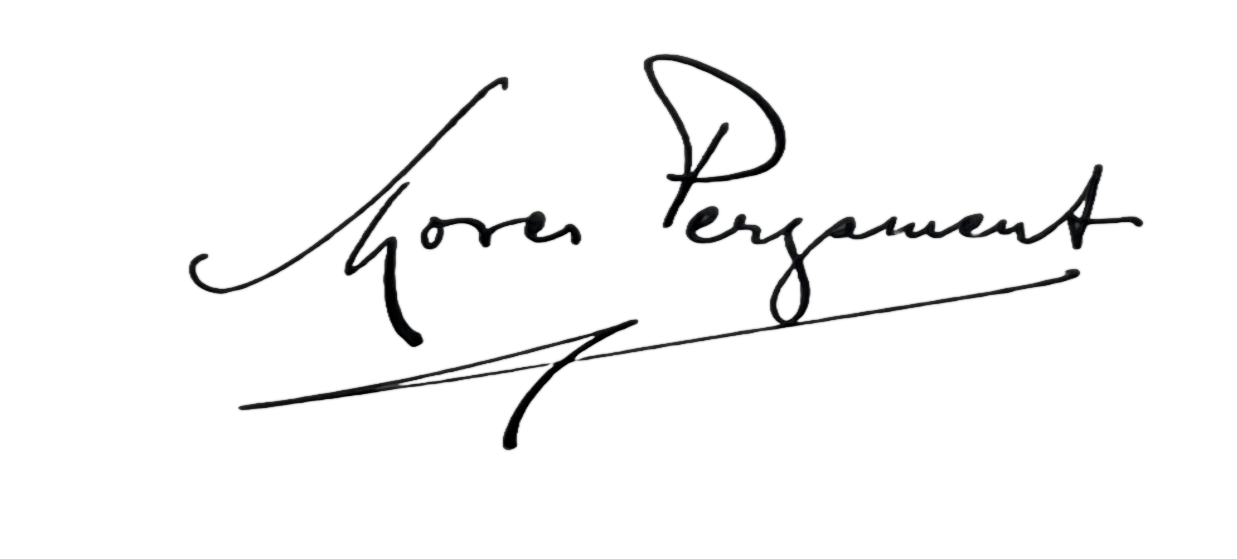
From a commemorative publication for Otto Järte
If I remember correctly, the incident took place sometime in the mid-’20s. During a voluntary — though no less fanatical — policy of isolation from all publicly performing musicians, I had within a few years managed to acquire a reputation as an absolutely impartial and incorruptible critic. It’s part of the story, so forgive me if I begin here by speaking about myself. I will not say much more in that vein; what I’ve said should be enough to understand the points that follow.
‘Watch out, lad — here comes Oj-Oj to Svenska Dagbladet!’
It was Fridulf, squinting behind his gold-rimmed spectacles, who fired the warning shot. ‘Who’s Oj-Oj?’ I naturally asked, curious as I was about every change on the editorial staff. ‘That fellow — he butts into everything,’ Fridulf replied. ‘There’s no area of the editorial work that he won’t stick his nose into. Watch out, I’m telling you.’
That sounded threatening enough, but, conscious that everyone on SvD’s editorial staff had so far respected my independence as an uncompromising requirement, I answered gruffly: ‘I’m not afraid of Mr Oj-Oj or anyone else. Besides, he probably won’t take me on. If he’s to be political editor, as you say, well, like most politicians he doesn’t know very much about music. And if he knows no more than usual, he has no weapons against me.’ (As you can see, I was at that time as green as I was self-assured.)
It was not long before Otto Järte took his place and his voice on SvD’s editorial staff. I was rarely at the paper except in the evenings and late at night. From “the Brothers of the Night” — the tightly knit night desk — I soon learned quite a good deal about Oj-Oj’s dictatorial ways. I laughed heartily, blissfully unaware. After all, I had not in any way been affected by that dreadful fellow’s behaviour. The others could blame themselves, I thought. Those who allow themselves to be dictated to…
But one fine day — it was in the afternoon when I had popped into the office on an errand — I saw a short, compact, rather bald gentleman stride into the editorial room. He radiated prosperity and self-confidence, if not self-sufficiency. We were introduced. He eyed me from head to foot and, with no ceremony, said, ‘At this newspaper we shall not write anything unfavourable about John Forsell!’
I was so perplexed that I completely lost the power of speech. Around the table sat some of the day editors, staring at me in tense expectation. That did nothing to improve the situation. I was close to exploding and felt that if I did not leave the room at once some catastrophe would occur. Where had my courage gone in a matter of seconds, my well-tried courage? What power had turned me into a coward in less than ten seconds? There stood Oj-Oj with his intricate little smile, looking almost like a malicious gnome. Confused and at a loss, I turned my back on him without a word, slammed the door and stormed out as if possessed by an evil spirit.
I seethed the rest of the day. At night I lay awake for the most part. The shameless surrender of self burned like fire in my mind. I did not understand myself and could not quite fathom what had happened or how it could have happened to me. But by dawn I had reached a decision: immediate vindication. It was agony to have to wait until eleven, when Järte usually arrived at the office. He was already there when I came. I met him in the corridor, on his way from his room to the editorial room.
‘Forgive me, Dr Järte,’ I said, and went straight to the point. ‘You caught me off guard yesterday. I was completely speechless. Nothing like that has ever happened to me at SvD before, and I only want to tell you that, up until now, I have never accepted directives concerning my work as a critic, and I shall not accept any in the future. Least of all from you, who belong to the political department.’
In truth, it ought now to have been his turn to explode. If he were to have an outburst now, I thought, all the better. Then everyone would rush forward and want to know what had happened. And they would certainly be told. It would be my triumph.
But nothing of the sort happened. Oj-Oj the Terrible stood for a few seconds completely unmoved. Then the sarcastic glint at the corner of his mouth dissolved into a short, hearty laugh. He patted me on the back and said, ‘But you understand a joke, don’t you?’ And after giving me a look of deep, sympathetic understanding he added, ‘I am rather fond of you. Let’s drop the titles!’
He held out his hand. I stood there dumbfounded and did not know at once how to respond. Thoughts flashed through my mind like dry lightning — mute, ineffective. I stammered something about a strange dissolution. ‘Not strange at all,’ said Järte. ‘Think it over and you’ll see what I mean.’
I really thought it over. And I understood — both his brusque outburst at the first meeting and his reaction at the second. Both what he had said and, perhaps even more importantly, what he had left unsaid. From that latter meeting dated a friendship between the two of us that lasted throughout my time at Svenska Dagbladet. After that we unfortunately never met again.
Moses Pergament, pp. 61–63 in Otto Järte sjuttio år: från vänner den 10 oktober 1951 (‘Otto Järte at Seventy: From Friends on 10 October 1951’), published by Svenska Dagbladet, 1951. Translated from Swedish by Martin Malmgren.